
Secure access to your accounts 24/7. Also available on our mobile app – GHFCU 2 Go!

The holiday season should be a time of joy—not stress over fraud, scams, or financial mishaps. As shopping ramps up and digital transactions surge, criminals become more active, making it essential for Credit Union members to stay alert and informed. In this guide, we’re sharing 24 holiday safety tips designed to help you safeguard your money, protect your identity, and enjoy the season with confidence. From spotting phishing attempts to strengthening your online security, these practical strategies will help you stay one step ahead and keep your financial well‑being secure all winter long.
Bring Packages Inside
Stealing delivered packages is more common during the holidays. Bring deliveries indoors to avoid theft or giving the impression that you’re out of town. Learn more
Keep all your devices up to date
Make sure your devices are up-to-date with basic security measures to lessen your chance of becoming a victim of fraud. Learn more
Update Your Antivirus Software
Make sure that your computer security software installs updates regularly. And make sure your operating system is also up to date. Learn more
Stay “in bounds”
Criminals want to take communications with you “out of bounds” to strip away any protection that sales platforms offer. For example, on eBay, don’t accept the invitation of bidding “out of the platform” by email or SMS. It can be tempting to avoid commissions taken by some platforms, but it is worth saving a few pennies compared to potentially losing a lot more to a fraudulent transaction. Learn more
Don’t overshare on social media
Leaving home for a holiday trip? Don’t post this information publicly — be aware of your social media privacy settings. Learn more
Don’t open suspicious emails or click links
There is an increase in phishing scams around the holidays. Remember, reputable businesses, financial institutions, the IRS, and credit card providers will never ask for personal information in an email or by calling you. Also, don’t believe all offers – Be wary of “too good to be true” ads, giveaways, and contests. Learn more
Be careful of messages regarding shipping changes
Go to your official trusted retailer website to track shipping instead of clicking a link in an unexpected email.
Watch out for holiday greeting cards
They may not be from the sender you think. Don’t open these unless you’re certain you can trust them.
Avoid charity scams
The holidays are an important time to give to those in need, but many people will take advantage of this. Watch for spoofed or fake phone numbers that look real, copycat organization names, sweepstake promises. You’ll notice a big uptick in the number of emails, letters and phone calls you receive from charitable organizations. Use caution — and don’t give credit card information if a charity calls you. Instead, do homework, and if you wish to give, contact a charity directly. Learn more
Cryptocurrency scams
Scammers may post ads online that promise big payouts if you invest in their cryptocurrency, only to find that you cannot withdraw the money you’ve invested. Or they may offer easy-to-use software to help you mine for cryptocurrency, only to find it steals your money or personal information instead. Research before you invest. Avoid sites that “guarantee profits,” including ones with celebrity endorsements, which can be easily faked. Learn more
Gift cards
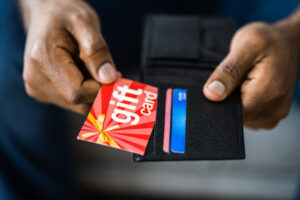
Be careful of phone calls, websites or social media sites that offer gift cards deals or request payment in gift cards. Learn more
Shop with familiar companies
Fake and unscrupulous internet retailers exist. Be suspicious of unbelievably low prices compared to other vendors.
Only visit and shop on websites and apps you know and trust – It may cost a little more but it is worth it. Many tricky fraudulent websites and apps come online during the busy retail periods offering massively discounted items. Learn more
Protect your personal data
Criminals often target your personal data, not just your payment info. Holiday websites may ask you to fill out surveys or forms in exchange for holiday discounts. Remain vigilant of what data you are providing, to whom, and for what purpose. Learn more
Do your research
Research products and sales before shopping. Use websites, smartphone apps, and social media to research products, compare prices, and find sales and discounts before you start shopping. Many retailers will offer different sales throughout the holiday shopping season. Avoid entering your personal information to get a coupon as some scammers use the promise of discounts to steal your information. Make sure the business has a physical address and phone number you can contact if there’s a problem. You can also check for reviews on sites like Facebook, Yelp and Google.
Check for recalls
To check if a gift or toy has been recalled, visit the Consumer Product Safety Commission website recall section.
Check your statements and credit regularly
The holidays are a busy time, it can be easy to miss a stray transaction. Look over all your transactions so that you can spot any that may look unfamiliar, no matter how small the amount. This can help stop what could otherwise be long-term fraud. Learn more
Use good password practices
When doing a lot of online shopping, it can be tempting to use the same password (or an easy-to-remember password) for multiple stores. Use strong and unique passwords on all your online accounts – Don’t use the same password on more than one account or the same passwords you use at your financial institutions. Learn more
Make sure an online store is secure
Never buy anything online using your credit card from a site that doesn’t have SSL (secure sockets layer) encryption installed – at the very least. You’ll know if the site has SSL because the URL for the site will start with HTTPS – instead of just HTTP.
Watch your wallet and bags
Thieves know you’re distracted during holiday shopping. Keep track of your wallet at all times and don’t leave purses, shopping bags or your phone behind while you browse. Learn more
Keep devices in view
Know where they are throughout the course of any holiday travel.
Use caution on public Wi-Fi
Only connect to known WiFi networks – Beware of WiFi network names that have typos, extra characters, or no password protection. Learn more
Keep track of your cards during checkout
Make certain you get your card back after every transaction. Return it to its place in your wallet—never drop it in a shopping bag or stick it in your pocket. Learn more
Guard your PIN
If you pay with debit cards, block the keypad while you enter your PIN. Learn more
Be careful what you say
Many stores ask you for personal information when you’re checking out. For example, you will typically be asked for your home address, phone number and perhaps your birthday when you sign up for a customer loyalty program. Don’t reveal too much information out loud in a crowd.
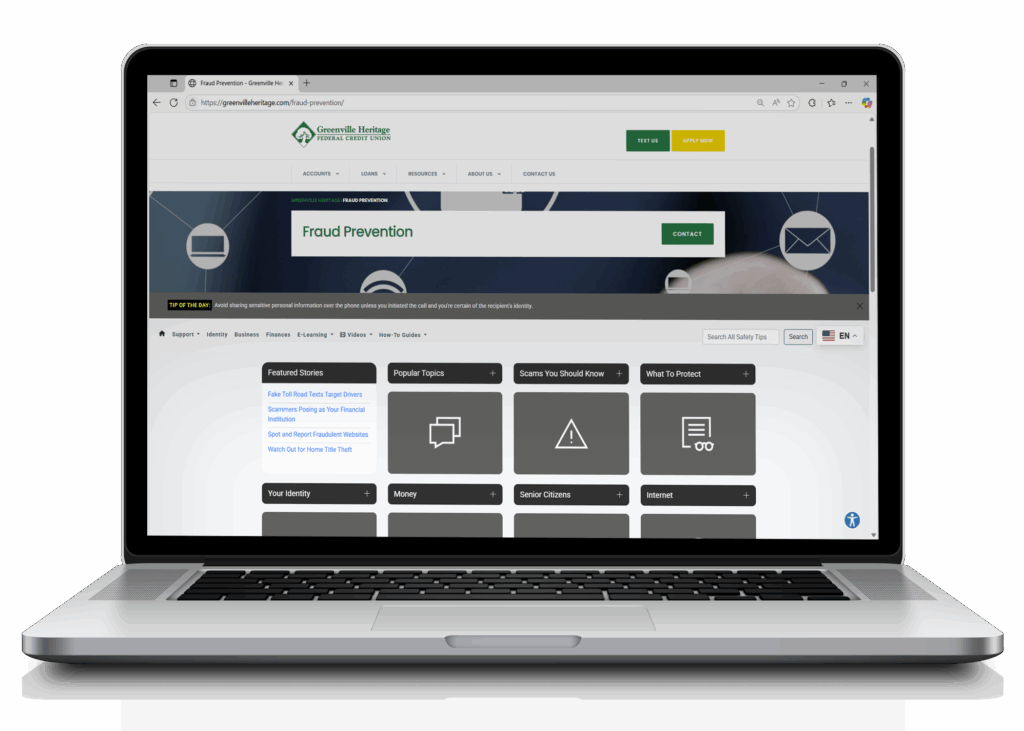
Stay informed and prepared with the GHFCU Fraud Prevention Education Center. Find tips and tools to protect your identity and money, ensuring your safety online and while traveling.


 520 W. Washington Street Greenville, SC 29601
 864.467.4160